 CALL 312-857-1700

How Chicago’s Humidity and Winter Salt Affect Your Fine Jewelry
If you own fine jewelry and live in Chicago, you’re dealing with one of the most challenging climates for precious metals and gemstones in the United States. This comprehensive guide explains exactly how Chicago’s humidity, road salt, and extreme temperature swings affect your engagement rings, gold pieces, silver jewelry, and delicate gemstones — plus the protective steps we recommend as jewelry care experts. Whether you’re a longtime Chicagoan or new to the Windy City, understanding these environmental factors will help you preserve your most treasured pieces for generations.
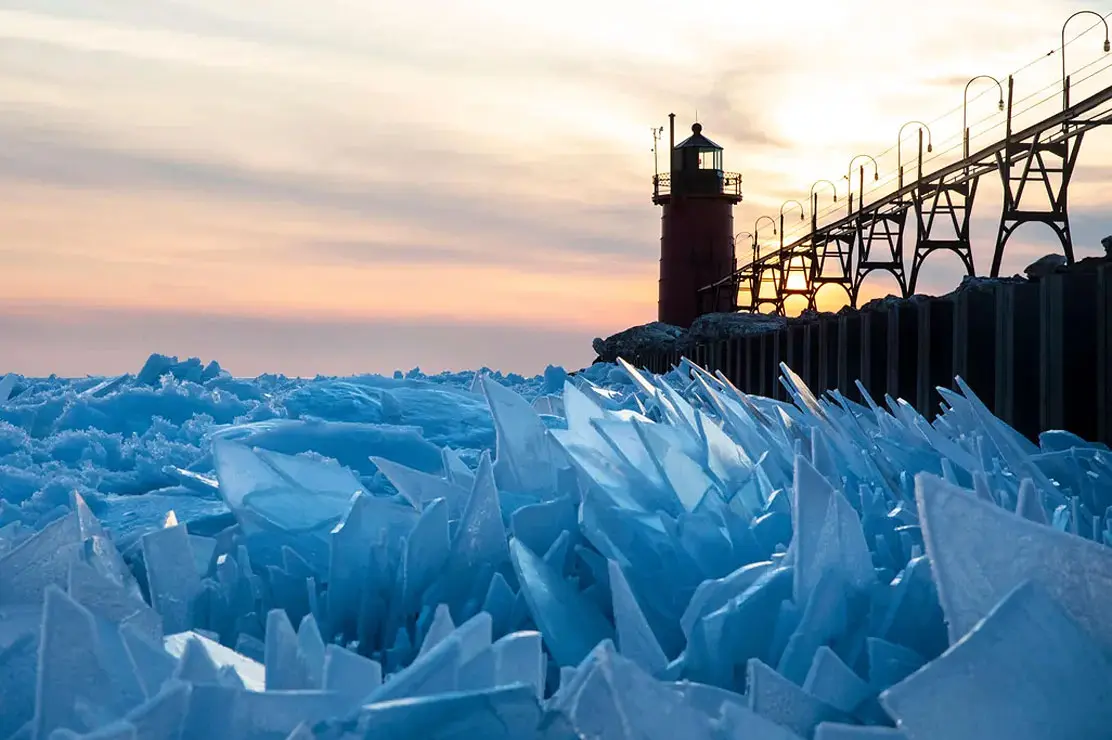
Living in the Windy City means embracing the beauty of all four seasons — from sparkling summers on Lake Michigan to the picturesque (if freezing) snowfalls in Millennium Park. But while we’re busy swapping our breezy linens for heavy parkas, we often forget that our most precious possessions — our jewelry — are also feeling the brunt of the Chicago climate.
Between the sweltering humidity of July and the relentless road salt of January, Chicago presents a unique set of challenges for gold, silver, and gemstones. According to the Gemological Institute of America (GIA), environmental factors like humidity, chemical exposure, and temperature fluctuations are among the leading causes of preventable jewelry damage. Here’s how our local environment impacts your fine jewelry and what you can do to protect your sparkle.
In Chicago, the “humidity dome” is real. When the moisture levels spike — often exceeding 70% relative humidity during July and August — your body reacts by retaining water.
High humidity often causes your fingers to swell by half to a full ring size. If you’ve ever struggled to get your engagement ring off after a day at a Cubs game, you’ve experienced this firsthand. The National Weather Service reports that Chicago experiences an average of 45 days per year with high humidity levels that can affect body swelling.
Forcing a ring off a swollen finger can stress the metal band or even warp its shape over time. Conversely, if you sized your ring during a humid July, it might become dangerously loose once the dry January air hits, increasing the risk of it slipping off unnoticed.
Pro Tip: Never force a ring off. Use cold water or a bit of dish soap to reduce swelling before removing your jewelry. Consider having your jeweler assess proper sizing during a moderate-weather month like October or April.
Chicago’s Department of Streets and Sanitation spreads an average of 300,000 tons of rock salt every winter to keep our streets and sidewalks safe. While it’s great for traction, it’s devastating for fine metal — and your jewelry is constantly exposed when you’re navigating city streets.
Salt is a corrosive agent that accelerates oxidation. When salt-laden slush splashes onto your rings or bracelets, it can lead to “pitting” — tiny holes that develop in the metal surface. Over time, this weakens the structural integrity of your jewelry and dulls its appearance.
Many de-icing agents contain calcium chloride and magnesium chloride, chemicals that react similarly to pool chlorine. These can leach the base metals (like copper and zinc) out of 14k or 18k gold alloys, potentially leading to stress fractures in your settings and a compromised finish.
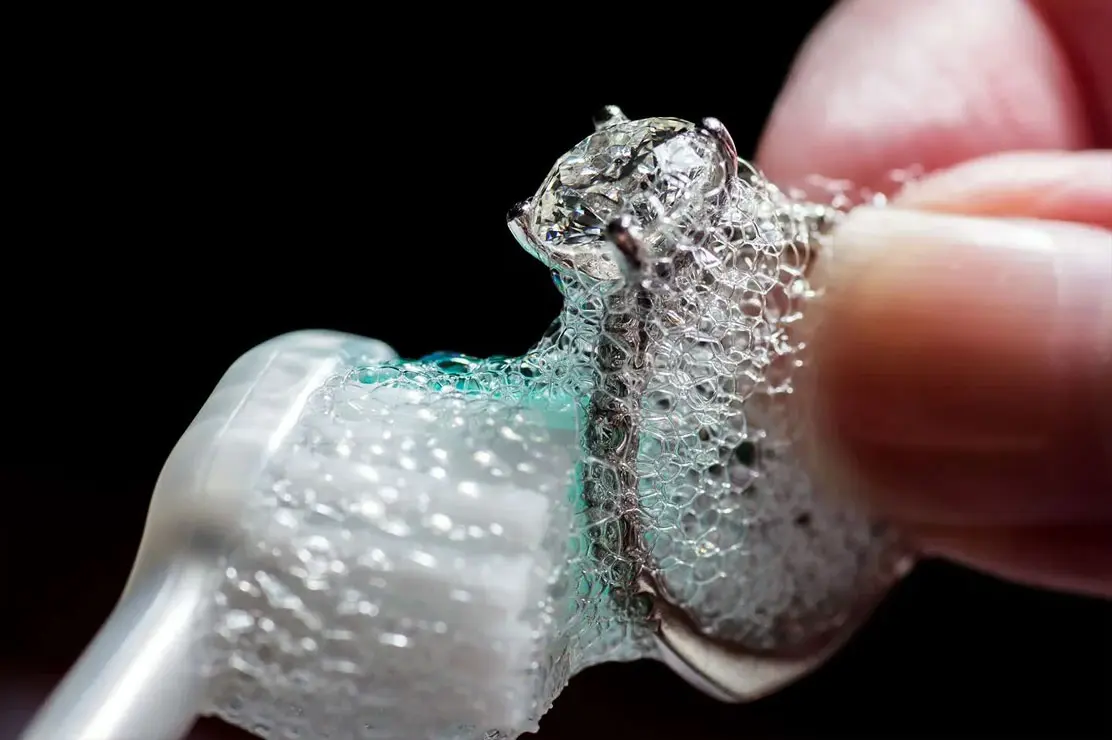
Pro Tip: After walking through the city in winter, rinse your jewelry in lukewarm filtered water and pat it dry with a soft cloth to remove any salt residue immediately.
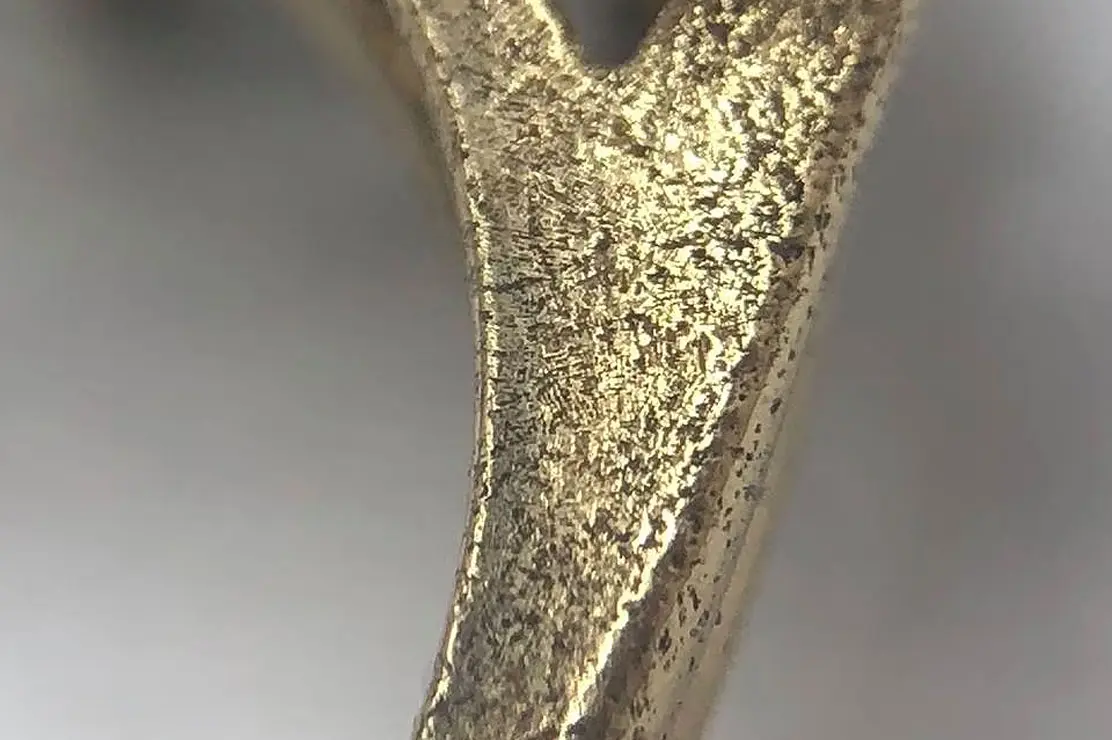
Close-up of Chlorine Damage to Ring
One of the most “Chicago” experiences is walking from a 10°F sidewalk into a 75°F heated building. These extreme temperature fluctuations — sometimes a 65-degree difference in seconds — can be particularly hard on certain gemstones.
Gems like opals, emeralds, and pearls are porous or contain trace amounts of water within their crystalline structure. Rapidly moving from extreme cold to extreme heat can cause these stones to crack, chip, or develop a network of fine lines called “crazing” that permanently damages their appearance.
Metals expand and contract at different rates than gemstones. Frequent thermal shock causes the metal prongs holding your diamonds to gradually weaken and loosen. This is why jewelers report a spike in lost stones every spring after a harsh Chicago winter.
You don’t have to leave your jewelry in a safe until spring. A few simple habits will keep your pieces Chicago-proof year-round:
Put your jewelry on after you’ve applied lotion, sunscreen, and perfume (which trap salt and grime against the metal) and take it off as soon as you get home. This minimizes exposure time to harmful environmental elements.
Have a local Chicago jeweler check your prongs every autumn before temperatures drop. Ensuring your stones are secure before the “contraction season” begins is the best way to prevent unexpected stone loss during winter.
Use a fabric-lined jewelry box with separate compartments. Avoid leaving your pieces on a bathroom counter where humidity from the shower accelerates tarnishing in silver and lower-karat gold. Anti-tarnish strips can provide additional protection during humid summer months.
Your jewelry is meant to be worn and celebrated, whether you’re strolling down Michigan Avenue or enjoying a winter night at a jazz club. By understanding how the Chicago elements interact with your fine pieces, you can ensure they remain as timeless as the city skyline itself.
Is your jewelry ready for the season? Stop by our showroom for a professional cleaning and safety inspection!
Yes, road salt is highly corrosive and can cause pitting, tarnishing, and even structural weakening in gold jewelry — especially 14k and 18k gold alloys. Chicago spreads approximately 300,000 tons of salt annually, making exposure almost unavoidable during winter months. Rinsing your ring with filtered water after outdoor exposure helps prevent long-term damage.
Your fingers naturally swell in high humidity and heat due to water retention, which can make rings feel tight during Chicago summers. In dry winter air, fingers shrink, causing rings to feel loose and increasing the risk of loss. Many Chicago jewelers recommend sizing rings during moderate weather in spring or fall for the most comfortable year-round fit.
Opals, emeralds, pearls, and tanzanite are particularly vulnerable to thermal shock from Chicago’s extreme temperature swings. These stones are either porous or contain water, making them susceptible to cracking when rapidly moving from freezing outdoor temperatures to heated indoor spaces. Diamonds and sapphires are more resistant but their settings can still be affected.
Chicago residents should have fine jewelry professionally inspected at least twice per year — ideally in early fall before winter weather begins and again in spring. This schedule allows jewelers to tighten prongs before thermal contraction season and assess any salt damage after winter ends. Regular inspections can prevent costly stone loss and catch corrosion early.
Absolutely. Chicago’s summer humidity accelerates the oxidation process that causes silver tarnishing. High moisture levels in the air react with silver’s surface, creating silver sulfide (tarnish) more rapidly than in drier climates. Storing silver in anti-tarnish bags and keeping it away from bathroom humidity can significantly slow this process.
Never force a stuck ring, as this can damage both the ring and your finger. Instead, hold your hand above your head for a few minutes to reduce blood flow, then apply cold water or a small amount of dish soap to lubricate the ring. If it still won’t budge, a jeweler can safely remove it without causing damage to the band.
It’s best to remove fine jewelry before these activities whenever possible. Direct contact with salt, de-icing chemicals, and wet winter gloves creates the perfect conditions for metal corrosion and gemstone damage. If you must wear jewelry outdoors in winter, remember to clean it thoroughly with filtered water and a soft cloth immediately upon returning home.
Check out our professional DS-Care Service Plan or click here to book your personal appointment today!
📅 Last updated:


