 CALL 312-857-1700

Diamond Buying Guide: Diamond Clarity Chart
Buying a diamond can feel… well, a little overwhelming. You walk into a jewelry store or browse online, and suddenly you’re swimming in talk about cut, color, carat… and then — clarity. This one often throws people for a loop.
That’s where the diamond clarity chart really comes in handy. It helps you figure out just how much those tiny natural “flaws” inside a diamond matter — and how they affect what you see, what you pay, and what you end up taking home.
See, every diamond tells a story. And along the way, deep beneath the earth, most diamonds picked up little marks called inclusions or surface blemishes. They’re perfectly natural — but depending on how visible they are, they can either add character or hurt the diamond’s beauty and value.
That’s exactly why we put together this diamond buying guide. You don’t need a degree in gemology. You just need to know what to look for, how to read the GIA clarity scale, and how to use the diamond clarity chart to find the right balance between beauty and budget.
By the time you’re done reading, you’ll know when to splurge on clarity, when it’s okay to dial it down a bit, and how to pick out a diamond that truly sparkles — not just on paper, but on your hand.
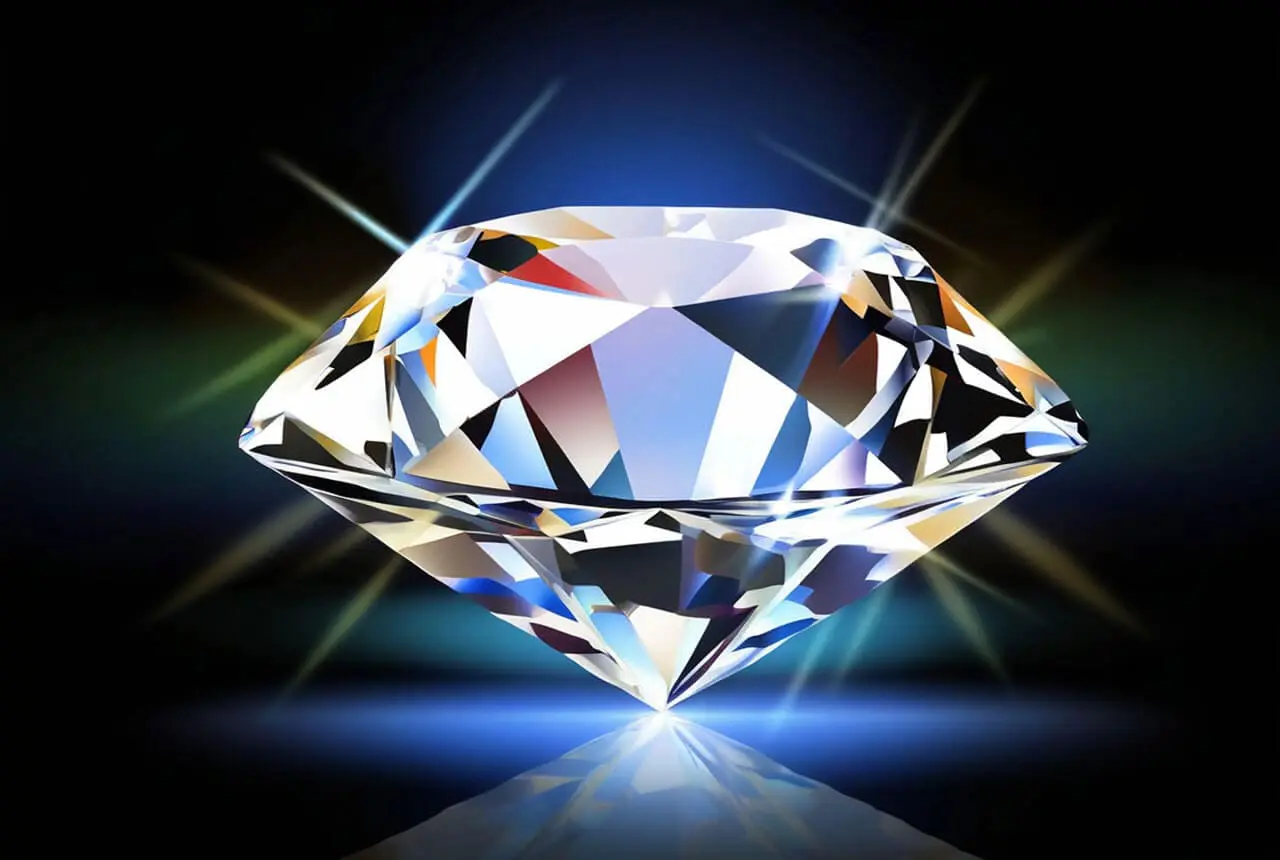
Let’s cut to the chase: clarity only matters at the point where it affects how your diamond looks. Diamonds with visible inclusions can disrupt the brilliance and compromise the diamond’s structural integrity.
You may have heard of the 4Cs relating to diamond clarity — color, cut, clarity, and carat. Of these, clarity often gets the least attention. But here’s the thing: those little marks inside (called inclusions) and outside (blemishes). They can really make a difference.
Some are so tiny that even under a jeweler’s loupe or microscope, you’d barely notice. Others? Not so subtle. A big or poorly placed inclusion can make a diamond appear cloudy or less brilliant. And in some cases, it can weaken the stone. Probably not the best choice if you’re looking for something to wear on a daily basis.
So why does clarity matter? A few key reasons:
In short: diamond clarity explained — it plays a big role in both how stunning your diamond looks… and how sturdy it will be.
But here’s the kicker: you don’t always need to chase perfection. Some diamonds with slightly lower clarity grades can still look amazing — especially if you know what to look for. And that’s what this guide is here to help you figure out.
Okay — so how do you actually use this guide? Easy. Whether this is your first diamond-buying adventure, or you’re looking to fine-tune what you already know, we’ll walk you through clarity step by step. No stuffy jargon — just clear, helpful tips.
Here’s what you’ll learn:
We’ll also touch on how clarity fits with the other 4Cs — cut, color, and carat — so you can shop smarter. Think of this as your cheat sheet to making a diamond choice you’ll love (and feel great about).
Ready? Let’s dive in and get crystal clear on what clarity really means.
At its core, clarity is all about how “perfect” — or not — a diamond is inside and out. Think of it like this: as diamonds form deep underground, over millions of years, they pick up little marks and quirks along the way. These are known as inclusions (inside the stone) or blemishes (on the surface).
Some diamonds are nearly flawless. Others have visible “birthmarks” from their natural growth process. That’s where the diamond clarity chart comes in — it helps grade just how free the diamond is from these imperfections. The higher the grade, the cleaner the stone.
Trusted labs, like the GIA (Gemological Institute of America), use their clarity scale to give each diamond an official grade — which can have a big impact on price and beauty. And don’t worry — we’ll break down exactly how this scale works in just a bit.
Let’s get a little more specific:
Here’s the fun part — how this all impacts what you see. Diamonds with lots of visible inclusions can look hazy, dull, or less sparkly. On the flip side, well-cut stone with minimal flaws will refract more light — that brilliant, head-turning sparkle we all love.
But — and this is important — you don’t need a “perfect” grade to get a beautiful diamond. Many lower-grade stones still appear flawless to the naked eye, depending on the size and position of the flaws. That’s why knowing how to read the diamond clarity chart can really help you shop smart.
Clarity plays a big role in determining a diamond’s price. The cleaner the stone, the rarer it is — and the more it’ll cost. But not all price jumps are worth it. Sometimes, moving up a grade won’t make much visible difference… but it’ll bump up the price significantly.
| Clarity Grade | Typical Price Impact vs Lower Grades |
|---|---|
| FL / IF | +30-50% more than VS grades |
| VVS1 / VVS2 | +20-30% more than VS grades |
| VS1 / VS2 | Moderate premium for near-flawless |
| SI1 / SI2 | Great value if eye-clean |
| I1 – I3 | Much lower prices due to visible flaws |

The GIA clarity scale is the gold standard for grading diamonds. It runs from “Flawless” (FL) all the way down to “Included” (I3). Each diamond is graded by trained gemologists who examine the stone under 10x magnification and consider:
Here’s a breakdown of the grades you’ll see on a diamond clarity chart:
| Grade | Visible Flaws | Eye-Clean? | Recommended For |
|---|---|---|---|
| FL / IF | None | Yes | Collectors, high luxury |
| VVS1 / VVS2 | Extremely faint | Yes | Premium buyers |
| VS1 / VS2 | Very minor | Yes | Best value for rarity |
| SI1 / SI2 | Some flaws | Often | Best value for budget-conscious beauty |
| I1 – I3 | Obvious | Not often | Low-end markets |

When you look at a diamond’s official GIA report, one section that always catches the eye is the little diagram known as the “plot.” It’s like a mini map of your diamond — showing exactly where any inclusions or blemishes are located.
Here’s how it works:Here’s where things get interesting. Every diamond is evaluated using 10x magnification. That’s powerful enough to reveal tiny imperfections you’d never spot on your own. A stone that looks absolutely flawless to you might still have little inclusions hiding under magnification — and that’s okay!
Remember:| Grade | Naked Eye View |
|---|---|
| FL / IF | Perfect |
| VVS1 / VVS2 | No visible flaws |
| VS1 / VS2 | No visible flaws |
| SI1 | Likely no visible flaws |
| SI2 | Possible visible flaws |
| I1 – I3 | Likely visible flaws |
| Clarity Grade | Typical % Premium vs Lower Grade | Visibility of Flaws |
|---|---|---|
| FL | +40-50% | None, flawless |
| IF | +30-40% | None |
| VVS1 | +25-30% | None |
| VVS2 | +20-25% | None |
| VS1 | +15-20% | None |
| VS2 | +10-15% | None to very minor |
| SI1 | +5-10% | Likely no visible flaws |
| SI2 | 0-5% | Possibly visible |
| I1 | Discount | Likely visible |
| I2 / I3 | Large discount | Likely visible |
 So — when should you spend a little more for clarity, and when is it safe to prioritize other factors like cut, color, or carat?
Not all diamond shapes reveal inclusions in the same way. Some cuts — with wide, open facets — make flaws more obvious. Others, with intricate patterns of light and sparkle, do a great job of hiding them.
Here’s what you need to know:If you’re shopping with a budget in mind (and honestly, most of us are), here’s some good news: you don’t need to aim for Flawless or IF clarity to get a gorgeous diamond. The key is knowing which grades offer the best “bang for your buck” — and where you can comfortably save without sacrificing beauty.
For most buyers:Here’s the real trick to buying a diamond: balancing the 4Cs — cut, color, carat, and clarity — to suit both your style and your wallet. If you overspend on clarity alone, you might have to compromise on size or sparkle. But with the right approach, you can get the best of all worlds.
Some quick tips:Want a diamond that looks amazing — without spending more than you need to?
Here’s how to shop smart:It’s worth repeating: clarity is important — but it’s not the only factor that determines a diamond’s beauty.
In fact:Here’s when it makes sense to prioritize clarity — and when you can safely allocate that budget elsewhere:
Spend more on clarity if:One last piece of advice: don’t get caught up in chasing perfection. It’s tempting — but in most cases, what matters far more is how the diamond actually looks to your eye, not what’s on the paper.
Here’s a quick recap:Buying a diamond isn’t about picking the “best” one on paper — it’s about finding the one that makes you smile every time you see it.
To do that:Q: Is FL or IF worth the premium?
A: Usually not for everyday buyers. Most people won’t see any difference compared to VVS1 or VS1 stones — but they will see the price jump!
Q: Are SI1 diamonds a good buy?
A: Absolutely — many SI1 stones are “eye-clean” and offer excellent value.
Q: Does diamond shape affect clarity needs?
A: Yes! Step cuts like Emerald and Asscher show flaws more. Brilliant cuts do a great job of hiding them.
Q: Should I trust online diamond buying?
A: Yes — as long as the diamond has GIA certification and the seller offers clear return policies.
Q: What’s better — bigger size or better clarity?
A: It depends on your taste! Most shoppers prioritize sparkle and size over tiny clarity upgrades that won’t be visible.
📅 Last updated:

